Permanent Lives in Temporary Places: The Addressing Crisis Hidden Inside Britain's Holiday Parks
Permanent Lives in Temporary Places: The Addressing Crisis Hidden Inside Britain's Holiday Parks
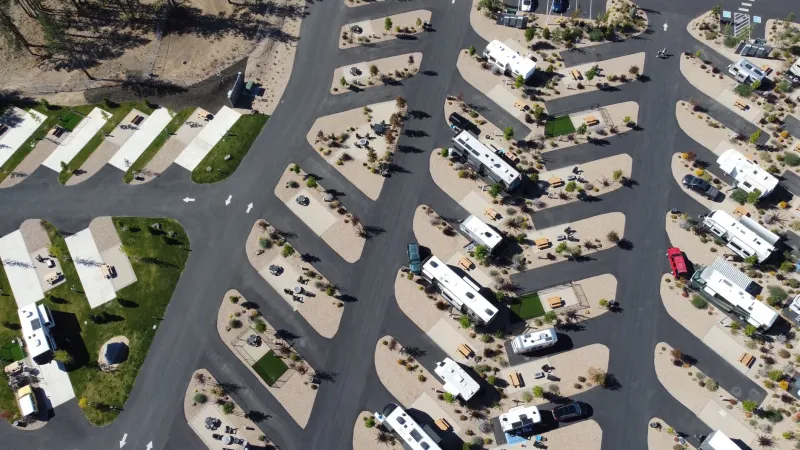
On a clear morning in coastal Lincolnshire, an ambulance crew responding to a cardiac emergency spent nearly seven minutes searching for the correct pitch within a large holiday park near Ingoldmells. The park had a single Royal Mail postcode shared across more than three hundred residential pitches. The patient survived. The delay, paramedics later noted in their incident report, was entirely a function of geography — or rather, of a geography that had never been properly recorded.
This is not an isolated anecdote. Across Britain, an estimated 160,000 to 200,000 people now live permanently in caravan parks, static holiday parks, and seasonal residential settlements — a figure that has grown substantially since 2010 and has accelerated sharply in the wake of the post-pandemic housing affordability crisis. Many of these parks were granted planning permission under conditions that explicitly prohibited permanent occupation. The people living in them are, in the most precise geographic sense, officially invisible.
A Housing Crisis Wearing a Leisure Industry's Clothes
The drivers are not difficult to understand. The average UK house price reached £285,000 in early 2024, according to ONS figures, whilst the average price of a static caravan or park home on a leasehold pitch can be a fifth of that sum. For people on modest incomes — retirees, key workers, young families priced out of conventional housing markets — a park home represents the only viable route to stable accommodation.
What the market has not provided, and what planning frameworks have conspicuously failed to anticipate, is the addressing infrastructure that dignified permanent residency requires. A pitch number within a park that carries a single postcode is not a postal address in any meaningful modern sense. It cannot reliably anchor a person to an NHS patient record. It does not satisfy the address verification requirements of most mortgage lenders, banks, or DVLA systems. It is, in geospatial terms, a location without a coordinate that any institutional system is prepared to recognise.
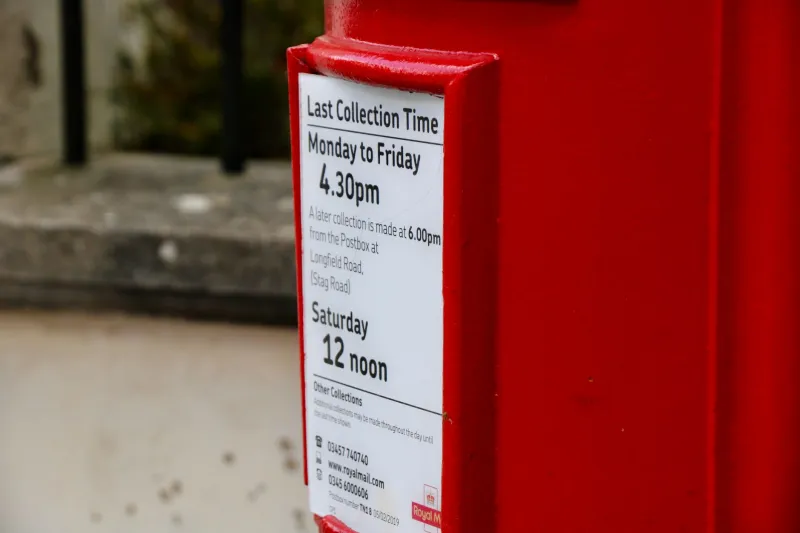
The Royal Mail's Postcode Address File — the PAF — is the canonical reference dataset for address management in Britain. Its coverage of holiday parks is, to put it charitably, inconsistent. Some parks have individual unit-level addressing; many do not. The PAF is updated continuously, but its inclusion criteria were designed around conventional dwellings. A static caravan on a leisure designation is not, in Royal Mail's operational logic, a dwelling at all.
What Emergency Services Are Actually Dealing With
The consequences are most acute when speed matters most. The Ambulance Service in England operates on the assumption that a 999 caller can provide an address that will resolve to a unique geographic point. In holiday parks, that assumption frequently fails. Dispatchers have reported receiving calls from residents who can describe their park by name but cannot provide anything more specific than a postcode covering an area the size of several football pitches.
Police services face a parallel problem. When domestic incidents occur within parks — and the evidence suggests they occur with at least the same frequency as in conventional housing — officers responding to calls may find themselves navigating an internal road network that appears on no official map. The Ordnance Survey's MasterMap dataset, the most detailed topographic record of Britain's built environment, captures park perimeters but rarely internal pitch-level detail at the resolution emergency responders require.
Some fire and rescue services have begun commissioning their own internal surveys of large parks within their areas, creating bespoke location reference layers that sit outside any national framework. This is admirable as local initiative. It is not a solution. It is precisely the kind of fragmented, duplicated effort that a national geospatial addressing strategy would eliminate.
The Reclassification Question
The fundamental problem is one of categorical mismatch. Holiday parks carry planning designations — typically C6 or mixed leisure use in England — that do not correspond to residential use classes. The people living in them are, in planning law, visitors. In lived reality, they are permanent residents with children in local schools, cars registered to park addresses, and health needs that require continuity of care.
A small number of local authorities have begun to engage seriously with this mismatch. North Lincolnshire Council has been working with Lincolnshire County Council and NHS Lincolnshire to develop a joint addressing protocol for large parks in the area, assigning what they term 'enhanced location identifiers' to individual pitches and sharing that data with emergency services through a shared GIS platform. The approach is pragmatic rather than legally transformative — it does not resolve the underlying planning designation — but it substantially improves operational response.
East Lindsey District Council, which administers one of the highest concentrations of holiday park accommodation in England, has similarly been piloting a scheme in which park operators are invited to submit georeferenced pitch-level data to a central council GIS layer, which is then made available to emergency services. Participation is voluntary. Uptake has been partial.
What neither initiative addresses is the systemic question: should Britain develop a formal seasonal-to-permanent geographic reclassification framework, under which parks meeting defined thresholds of permanent occupancy are required to obtain full residential addressing? The Department for Levelling Up, Housing and Communities (now subsumed within the Ministry of Housing, Communities and Local Government) has acknowledged the issue in correspondence but has not, to date, committed to any legislative action.
The Data Layer That Does Not Exist
From a geospatial perspective, the core gap is the absence of a national dataset that maps permanent occupancy within non-residential designations. Such a dataset would not require intrusive surveillance. It could be assembled through a combination of council tax registration data — where residents have succeeded in registering, which many have — NHS patient registration records, school roll data, and self-reported occupancy returns from park operators.
The Unique Property Reference Number system, maintained by GeoPlace — the joint venture between the Local Government Association and Ordnance Survey — theoretically provides a mechanism for assigning stable geographic identifiers to any physical structure. UPRNs already exist for many park home units. The problem is not the absence of a technical vehicle but the absence of a policy mandate to use it comprehensively.
Geospatial professionals working in the addressing domain have long argued that the UPRN framework is the correct foundation for resolving this crisis. A UPRN assigned to each pitch, linked to a verified geographic coordinate, and shared across the Address Base Premium dataset, would give emergency services, NHS systems, and local authorities a common reference point. The technical architecture is available. The political will has not yet materialised.
Conclusion: The Cost of Inaction
Britain's holiday parks are not going to empty. As long as the housing affordability crisis persists — and there is no credible forecast suggesting it will resolve quickly — the population of permanent residents in nominally temporary accommodation will continue to grow. Every month that passes without a formal addressing response is a month in which those residents remain geographically disenfranchised: harder to reach in emergencies, harder to register with public services, and harder to count in the planning calculations that might eventually provide them with genuinely permanent homes.
The technology to solve this problem is not novel. The data standards exist. The institutional frameworks are in place. What is missing is the recognition that a person's address is not a bureaucratic convenience — it is the coordinate from which everything else in modern civic life is measured.