Dead Codes Walking: The Silent Corruption of British Business Intelligence by Retired Postcodes

For most British businesses, a postcode is little more than a convenient shorthand — a seven-character string that transforms a vague address into a pinpointable location. It appears on invoices, feeds algorithmic routing engines, anchors demographic segmentation models, and informs decisions worth many millions of pounds. What relatively few organisations appreciate is that postcodes are not permanent. They are born, they evolve, and they die — and when they die, the records that carry them rarely receive the notification.
The consequences of this collective ignorance are neither trivial nor theoretical. Retired postcodes — those formally withdrawn from active use by Royal Mail — continue to circulate in commercial datasets, CRM systems, and geographic information platforms long after their expiry. Reassigned postcodes, which have been withdrawn and then reissued to cover an entirely different geographic area, present an even more insidious problem: they appear valid to every automated validation check, yet point a business's intelligence apparatus toward the wrong neighbourhood, the wrong demographic, or the wrong side of the country.
The Lifecycle That Business Ignores
Royal Mail maintains the Postcode Address File (PAF), the authoritative source for UK delivery point and postcode data. PAF is updated monthly, and those updates include retirements, reassignments, and boundary modifications that reflect changes in housing stock, street renaming, and administrative reorganisation. The challenge is not that this information is unavailable — it is that the organisations most dependent on postcode accuracy are often the least diligent about consuming it.
A postcode may be retired when the properties it served are demolished, when a large development is subdivided into more granular postal sectors, or when sorting logistics at a Royal Mail delivery office are restructured. In each scenario, the code ceases to represent a meaningful geographic reality. Yet within weeks, that same string may persist across dozens of downstream databases that have not been refreshed since their initial population.
Reassignment compounds the problem significantly. When a retired postcode is reissued — sometimes to an area geographically distant from the original — any business relying on historical associations attached to that code will draw conclusions that are not merely imprecise but actively misleading. A retail chain conducting catchment analysis, for instance, may find its model populated with purchasing behaviour data mapped to a postcode that now covers an entirely different socioeconomic community than the one that generated those records.
The Commercial Damage in Plain Figures
The financial consequences distribute themselves across several business functions, and their aggregate scale is rarely appreciated because the errors are diffuse rather than catastrophic. In logistics and last-mile delivery, parcels dispatched to retired postcodes either fail to route correctly through automated sortation or are delivered to addresses that no longer exist in their expected form — triggering costly redelivery cycles and eroding customer satisfaction metrics.
In retail property and site selection, the stakes are considerably higher. Location intelligence platforms used by high street operators, supermarket chains, and fuel forecourt developers routinely incorporate postcode-level demographic data sourced from census outputs, geodemographic classifiers such as ACORN or Mosaic, and historic transactional records. When the postcode layer beneath those datasets has drifted from physical reality, the resulting site scores are built on a corrupted foundation. A site ranked highly for affluent suburban footfall may, in practice, sit within a postcode that was reassigned following significant regeneration — meaning the demographic profile attached to it reflects a community that no longer occupies that space.
Financial services present a further dimension of concern. Credit reference agencies, insurers, and mortgage providers use postcode-level risk indicators as components of underwriting and affordability models. Where those indicators are anchored to retired or reassigned codes, the outputs may systematically over- or under-price risk for entire streets.
Why Validation Tools Fail to Catch the Problem
A persistent misconception among developers and data architects is that postcode validation — the process of checking whether a submitted string conforms to Royal Mail's formatting rules and exists within a reference database — is sufficient protection against obsolete data. It is not. Validation confirms only that a postcode is structurally well-formed and present within a reference file at a given point in time. It offers no assurance that the code remains active, that it still covers the geographic area for which it was originally recorded, or that the demographic attributes historically associated with it remain applicable.
The root problem is one of versioning. Most commercial systems that ingest postcode data at onboarding do not implement a mechanism to flag records whose postcodes have subsequently changed status within PAF. Unless a business has established a rolling data hygiene process that compares its live database against the current PAF monthly release, the corruption accumulates silently.
What Responsible Postcode Hygiene Looks Like
Organisations that take geographic data quality seriously have adopted several practices that, taken together, substantially reduce exposure to retired and reassigned postcode risk. The most fundamental is a scheduled monthly reconciliation process that compares internal postcode holdings against the current PAF release, flagging any codes whose status has changed and triggering a review workflow for affected records.
Beyond reactive hygiene, leading-practice organisations supplement PAF with Ordnance Survey's AddressBase Premium product, which provides a richer contextual layer including Unique Property Reference Numbers (UPRNs). By anchoring address records to UPRNs rather than postcodes alone, businesses insulate themselves from the volatility of the postcode layer — a UPRN persists through postcode changes, providing a stable geographic anchor even when the postal geography above it is reorganised.
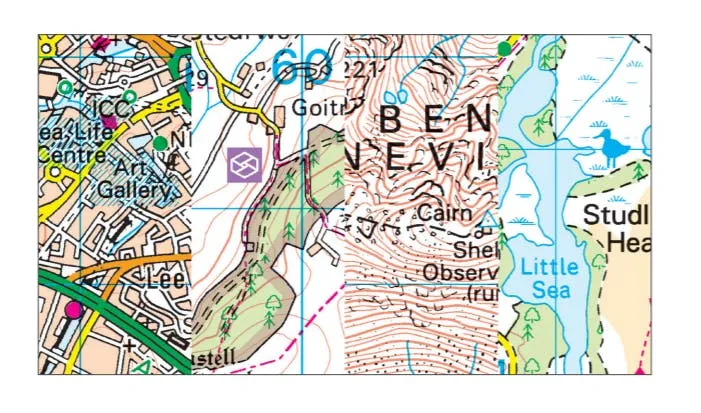 Photo: Ordnance Survey, via images.bauerhosting.com
For organisations managing large legacy databases, a retrospective postcode audit — comparing all stored codes against the PAF historic file to identify codes that were active at time of collection but have since been retired or reassigned — can quantify the scale of existing contamination and prioritise remediation effort.
The Case for a Centralised Retirement Registry
None of the above measures addresses the structural problem at its source: there is no single, authoritative, freely accessible registry of retired and reassigned postcodes with a mandate for businesses to consult it. Royal Mail's PAF subscription model, while comprehensive, places the burden of compliance on individual organisations whose awareness of the issue is patchy at best.
What Britain requires is a centralised postcode lifecycle registry — maintained by a public body such as the Geospatial Commission or Ordnance Survey — that publishes retirement and reassignment events in a standardised, machine-readable format accessible without commercial licensing friction. Paired with a mandatory update obligation for regulated sectors, such a registry would systematically reduce the accumulation of corrupted geographic intelligence across the economy.
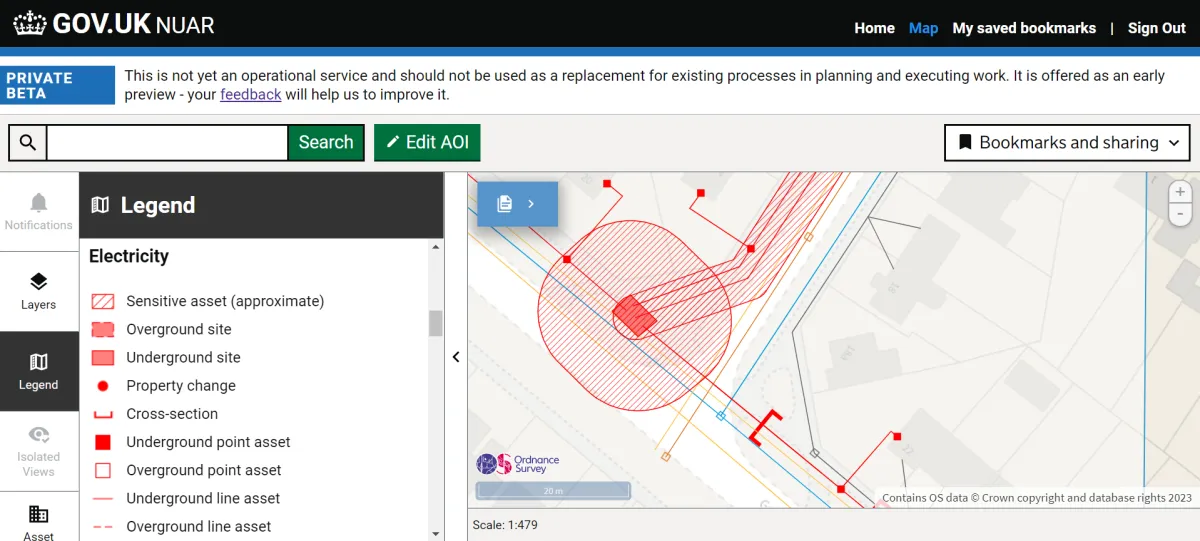 Photo: Geospatial Commission, via geospatialcommission.blog.gov.uk
The Geospatial Commission's National Location Data Framework provides a conceptual home for exactly this kind of infrastructure. The technical complexity is modest. The political will, as yet, is absent.
Conclusion
Postcodes are not the stable, permanent identifiers that most of Britain's commercial infrastructure assumes them to be. They are living designations, subject to continuous revision by an authority whose update cadence outpaces the data hygiene practices of most organisations that depend on them. Until businesses recognise postcodes as temporal data requiring active lifecycle management — and until the regulatory environment imposes meaningful obligations to keep pace with that lifecycle — the silent corruption of British business intelligence will continue, one retired code at a time.