Justice by Postcode: How Britain's Court Closure Programme Created a Geographic Access Crisis
Justice by Postcode: How Britain's Court Closure Programme Created a Geographic Access Crisis
The principle that justice must be accessible to all is among the oldest commitments in English common law. Yet when that principle collides with the geographic reality of modern Britain — a landscape of closed courthouses, threadbare bus networks, and postcode-dependent legal aid deserts — it begins to look less like a constitutional guarantee and more like an aspiration reserved for those who happen to live in the right place.
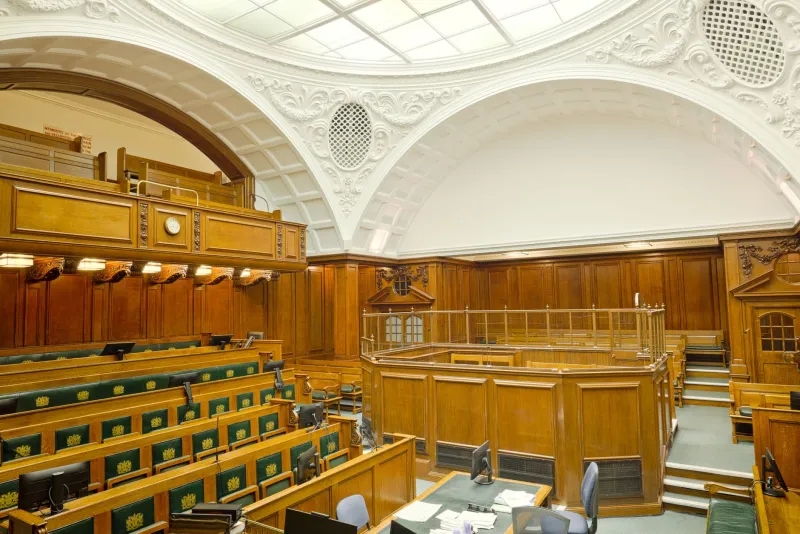
Since 2010, the Ministry of Justice has closed more than 260 magistrates' courts and county courts across England and Wales, reducing the total estate by over fifty per cent. The stated rationale was financial efficiency. The geographic consequence, however, was the systematic withdrawal of legal infrastructure from precisely those communities least equipped to absorb the loss.
The Closure Map Nobody Published
When CodexGeo overlaid court closure data from the Ministry of Justice against Office for National Statistics deprivation indices and Transport Focus accessibility scores, a clear spatial pattern emerged. Closures were not distributed evenly. They clustered in rural market towns, former industrial communities in the North and Midlands, and coastal areas where public transport provision is already among the weakest in the country.
In Yorkshire, residents of certain rural districts now face return journeys of more than three hours to attend a magistrates' hearing that may last twenty minutes. In Cornwall, the consolidation of court functions into Truro means that defendants, witnesses, and victims from the Penwith peninsula must navigate a public transport system that — outside of term-time tourism routes — operates infrequently and unreliably.
The closure programme was carried out without a published geospatial impact assessment. There is no official mapping of travel time to the nearest operational court against population distribution, no analysis of which communities fall below any reasonable threshold of access, and no modelling of how closures interact with the simultaneous contraction of legal aid provision. The decisions were made, in effect, in the dark.
Legal Aid Deserts and the Compounding Effect
Court buildings are only one layer of the problem. Legal aid provider distribution has contracted with equal severity, and the two patterns of withdrawal reinforce each other in ways that compound disadvantage.
The Legal Aid Agency's own data shows that large portions of rural England — swathes of Lincolnshire, Herefordshire, Suffolk, and Cumbria — now have no legal aid solicitor within a reasonable travel distance for family law matters. Housing and immigration advice deserts are even more extensive. When a resident of a market town with no legal aid provision is also required to travel to a consolidated court forty miles away, the combined burden of time, cost, and logistical complexity can effectively foreclose participation in legal proceedings altogether.
This is not a theoretical harm. Research by the Law Society and the charity Access to Justice Foundation has documented cases in which defendants have pleaded guilty to charges they disputed simply because attending court was practically impossible around work and childcare commitments. Victims have withdrawn from civil proceedings. Witnesses have declined to give evidence. The geographic barrier does not merely inconvenience; it distorts outcomes.
What a National Legal Geography Audit Would Require
The case for a systematic geospatial analysis of legal infrastructure is straightforward. Britain already maintains sophisticated location intelligence frameworks for health service planning — NHS England's analytical teams routinely model travel time to services against population need to inform commissioning decisions. No equivalent methodology exists for the justice system.
A national legal geography audit would need to integrate several data layers. Court location and jurisdictional catchment boundaries would form the base. Against this, analysts would map population distribution weighted by deprivation, car ownership rates (a critical proxy for transport independence), public transport isochrones — that is, the areas reachable within defined travel times using scheduled services — and the distribution of legal aid providers by practice area.
The output would not merely be descriptive. It would enable genuine standards to be set: a commitment, for instance, that no resident of England and Wales should face a return journey of more than ninety minutes by public transport to reach a court of first instance. Any community falling outside that threshold would trigger an infrastructure response, whether through the reinstatement of a physical court, the expansion of video-link hearing facilities, or the commissioning of mobile legal advice services.
The Technology Already Exists
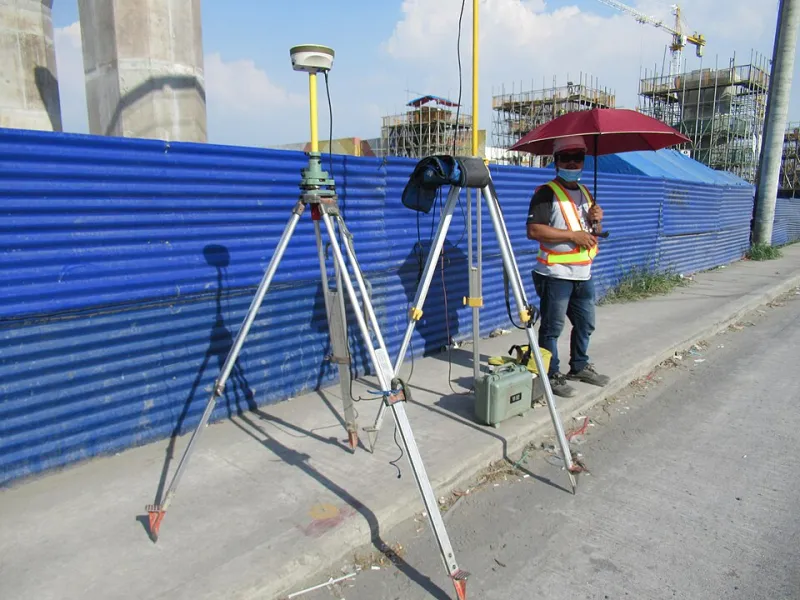
It is worth being direct about the technical feasibility of such an exercise. The geospatial capability required to conduct a national legal geography audit is not exotic. Ordnance Survey's National Geographic Database, combined with Transport for the North's travel time modelling tools and the Ministry of Housing's existing deprivation datasets, would provide a more than adequate analytical foundation.
 Photo: Ordnance Survey, via i.pinimg.com
What has been absent is not capability but political will. The court closure programme was driven by Treasury cost targets and executed without spatial analysis of its consequences. Reversing that approach — embedding geographic impact assessment into all future decisions about court infrastructure — requires a commitment from the Ministry of Justice that has not yet been forthcoming.
Some tentative progress is visible. HM Courts and Tribunals Service has expanded its video-enabled justice programme, and the use of Cloud Video Platform hearings increased substantially during and after the pandemic. However, digital access brings its own geographic inequalities: rural broadband connectivity gaps mean that video hearings are least reliable precisely where physical court access is most difficult.
Mapping the Way Forward
The justice system is infrastructure in the most fundamental sense. Like roads, hospitals, and water networks, it must be distributed according to where people actually live and what they can realistically reach. When that distribution is allowed to drift — driven by closure decisions made without spatial analysis — the result is not merely inefficiency. It is a structural form of inequality that the law itself is powerless to remedy, because the barrier is geographic rather than legal.
A national legal geography audit would not solve the access crisis overnight. Courts that have been sold or converted cannot easily be reinstated. Legal aid solicitors who have left the market do not return quickly. But without a rigorous, publicly available map of where legal access exists and where it does not, there is no rational basis for investment decisions, no accountability for the consequences of past closures, and no mechanism for ensuring that future changes do not repeat the same spatial failures.
Britain has the data. It has the analytical tools. What the justice system now requires is the same geographic discipline that has long been applied to health, education, and transport planning. Until it receives that discipline, the postcode lottery of justice will continue — silent, unmapped, and largely invisible to those who have never needed to find a court they could not reach.