Mapping Intelligence: Five British Firms Redefining What Geospatial AI Can Actually Do

Britain has rarely been short of geospatial talent. From the founding of the Ordnance Survey in 1791 to the satellite navigation breakthroughs of the late twentieth century, the country has consistently contributed to the science of understanding and representing place. What is distinctive about the current moment is not simply the pace of innovation, but its character: a generation of companies is now applying machine learning and spatial AI to problems that are entirely contemporary in origin, addressing the geographic consequences of climate change, digital inequality, and the datafication of daily life.
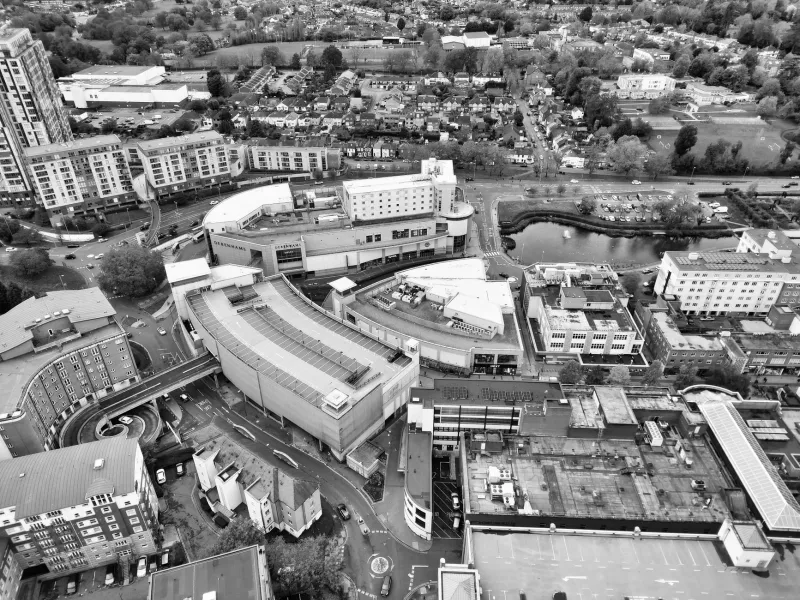
 Photo: Ordnance Survey, via stealherstyle.net
The five firms profiled below represent a cross-section of this emerging field. They are not the only players — Britain's geospatial AI ecosystem is broader and more varied than any single article can capture — but each illustrates a different dimension of what applied location intelligence looks like when it moves beyond mapping for its own sake and into the territory of measurable social and economic outcomes.
1. Gaiapath Technologies — Predicting Road Surface Failure Before It Happens
The Problem: Britain's local road network is in chronic disrepair, with the Asphalt Industry Alliance estimating a maintenance backlog exceeding £16 billion. Reactive patching — filling potholes after they form — is both expensive and ineffective. The geographic distribution of road surface failure is not random; it correlates with traffic load, drainage patterns, subgrade geology, and microclimate. Yet most highway authorities still allocate maintenance budgets using condition surveys conducted on fixed cycles, with little capacity for predictive prioritisation.
The Solution: Gaiapath, based in Leeds, has developed a predictive surface degradation model that ingests satellite-derived surface deformation data, historical rainfall records, vehicle count data from traffic sensors, and geology layers from the British Geological Survey to generate forward-looking risk scores for individual road segments at ten-metre resolution. The model is trained on a decade of historical condition survey data from participating councils, allowing it to identify the precursor signatures of accelerating surface failure before it becomes visible.
The Outcomes: Three North Yorkshire district councils trialling the platform in 2023 reported a 34 per cent reduction in emergency pothole repair call-outs on treated routes, with maintenance spending reallocated from reactive patching to targeted preventive treatment. The company is currently in procurement discussions with Transport Scotland and several Welsh local highway authorities.
 Photo: North Yorkshire, via www.thesprucepets.com
The Hurdles: Access to consistent, machine-readable historical condition survey data across different local authority formats remains the principal data integration challenge. Standardisation of highway asset data across England, Scotland, and Wales is, the firm's founders note with some understatement, a work in progress.
2. Aerolytics UK — Air Quality Inequality at Postcode Resolution
The Problem: National air quality monitoring networks provide aggregate data at relatively coarse spatial resolution. The lived experience of air pollution, however, is intensely local: a single street can experience markedly different nitrogen dioxide concentrations depending on traffic volume, building canyon effects, and proximity to industrial sources. In the absence of fine-grained spatial data, the correlation between air quality and socioeconomic deprivation — well-established in academic literature — cannot be quantified at the scale needed to inform planning decisions or public health interventions.
The Solution: London-based Aerolytics UK combines satellite-derived atmospheric composition data from the Copernicus Sentinel-5P instrument with a dense network of low-cost sensor deployments and a physics-informed dispersion model to generate hourly air quality estimates at twenty-metre resolution across all urban areas with populations above 50,000. A bespoke equity layer cross-references pollution exposure estimates with Index of Multiple Deprivation data, producing a composite inequality score for each postcode.
The Outcomes: The platform has been adopted by seven English local authorities and two NHS Integrated Care Boards as part of their statutory air quality action planning obligations. In one West Midlands authority, the equity analysis identified a primary school in the highest-deprivation quintile as experiencing pollution exposure 40 per cent above the borough average — a finding that directly informed a school street scheme subsequently implemented by the council.
The Hurdles: Sentinel-5P data has a ground resolution of approximately 3.5 kilometres, requiring significant downscaling through the dispersion model. Validation against reference-grade monitors is ongoing, and the company acknowledges uncertainty ranges that remain wider than ideal for regulatory decision-making.
3. Groundswell Geomatics — Detecting Agricultural Subsidence from Space
The Problem: Peatland drainage for agricultural improvement has been standard practice across upland Britain for over a century. As drained peat oxidises and compresses, the land surface subsides — sometimes at rates exceeding two centimetres per year. This subsidence is invisible to standard ground-based survey methods across large areas, yet it has profound implications for drainage infrastructure, field boundary integrity, and the viability of peatland restoration schemes.
The Solution: Edinburgh-based Groundswell Geomatics uses Synthetic Aperture Radar Interferometry (InSAR) — a technique that detects millimetre-scale ground movement by comparing phase differences between successive satellite radar images — to map land surface deformation across upland agricultural areas. An AI classification layer distinguishes peat-related subsidence from other deformation signals, producing annual movement maps at five-metre resolution.
The Outcomes: The firm's data has been used by Natural England and NatureScot to prioritise peatland restoration funding, directing investment towards areas of active, measurable loss rather than relying solely on desktop habitat assessments. A 2024 pilot in the Flow Country of Caithness and Sutherland identified 12,000 hectares of previously unquantified active subsidence, significantly expanding the evidence base for the area's UNESCO World Heritage designation bid.
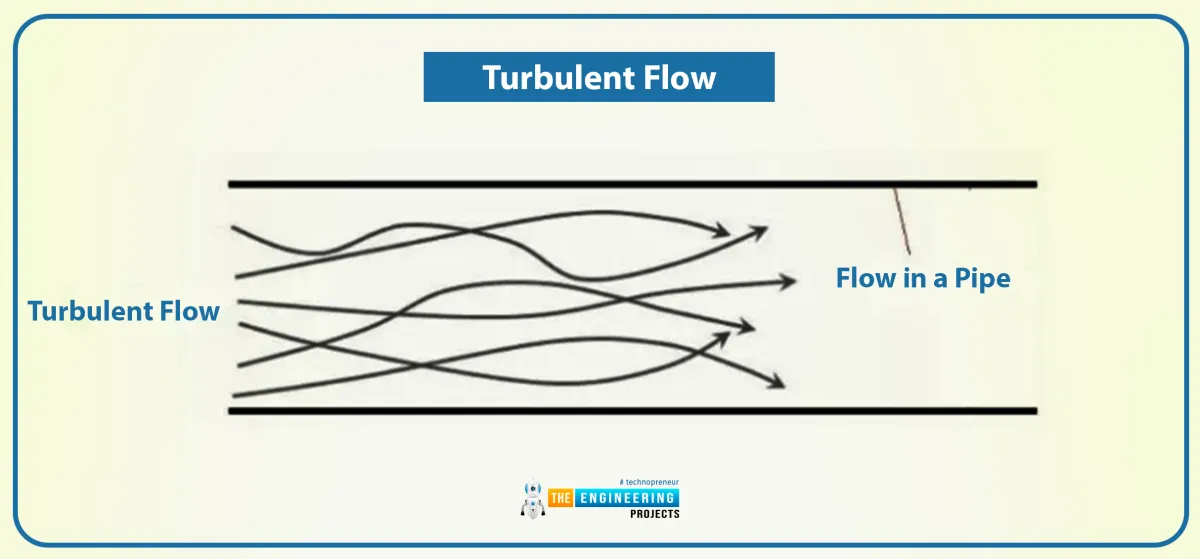 Photo: Flow Country, via images.theengineeringprojects.com
The Hurdles: InSAR coherence degrades in areas of dense vegetation, limiting utility in some upland contexts. Cloud cover over Scottish uplands also reduces the frequency of usable acquisitions, though the increasing density of SAR satellite constellations is progressively mitigating this constraint.
4. Pathwright Analytics — Modelling Pedestrian Accessibility at Urban Scale
The Problem: Pedestrian routing data in Britain is almost entirely derived from the road network, with footway attributes — surface quality, gradient, kerb presence, obstruction status — either absent or inconsistently recorded. For disabled people, parents with pushchairs, and elderly pedestrians, the navigability of a route depends on precisely these attributes. Yet no national authoritative dataset captures them, and local authority records are fragmented and largely non-spatial.
The Solution: Bristol-based Pathwright Analytics has developed a computer vision pipeline that processes street-level imagery — sourced from both commercial providers and its own mobile survey fleet — to automatically detect and classify footway attributes including kerb types, tactile paving, surface condition, and obstruction presence. The classified data is structured against the Unique Street Reference Number (USRN) framework, enabling integration with existing local authority asset management systems. A routing engine built on the enriched network generates accessibility-optimised routes for user-defined mobility profiles.
The Outcomes: The platform is currently deployed across twelve local authority areas, with a combined pedestrian network of approximately 28,000 kilometres. User trials with disability organisations in Bristol and Cardiff have demonstrated statistically significant improvements in route confidence and journey completion rates among wheelchair users.
The Hurdles: Street-level imagery coverage outside major urban areas remains inconsistent, and the computer vision model's performance degrades in conditions of poor lighting or heavy vegetation overhang. The firm is currently developing a community contribution module to allow local volunteers to supplement automated survey data.
5. Coastal Carbon Intelligence — Mapping Blue Carbon at Asset Level
The Problem: Saltmarshes, seagrass meadows, and intertidal mudflats store carbon at rates significantly exceeding those of terrestrial woodland, yet Britain's coastal blue carbon assets have never been comprehensively mapped at the spatial resolution required for voluntary carbon market verification or statutory biodiversity net gain accounting.
The Solution: Plymouth-based Coastal Carbon Intelligence uses multispectral drone surveys, combined with machine learning classification of satellite multispectral imagery, to produce habitat extent and condition maps for coastal blue carbon ecosystems at sub-metre resolution. A carbon stock estimation model, calibrated against field-measured biomass and sediment core data, converts habitat maps into verified carbon inventory figures compatible with Verified Carbon Standard methodologies.
The Outcomes: The firm has completed surveys covering over 4,200 hectares of English and Welsh coastline, generating the first spatially explicit blue carbon inventory for several estuary systems. Two coastal landowners have successfully issued voluntary carbon credits against the firm's verified data, with a combined value exceeding £380,000.
The Hurdles: The absence of a UK-specific blue carbon accounting standard creates uncertainty around long-term credit validity. The firm is actively engaged with the British Standards Institution's work on natural capital accounting frameworks, and regards standardisation as the single most important enabler of market scale.
These five firms share more than a common application of AI to geographic problems. They share a recognition that the value of location data is not intrinsic — it is created by the questions you ask of it. As the geospatial AI ecosystem matures, the distinctiveness of British contributions to this field will depend less on access to technology, which is increasingly commoditised, and more on the quality of the problems being identified and the rigour with which spatial evidence is translated into action.