The Digital Archaeology of British Streets
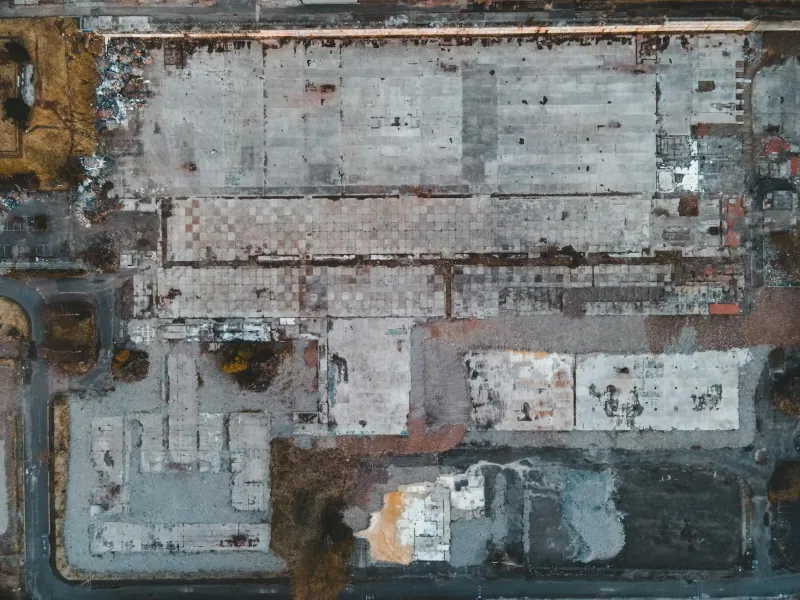
In the heart of Manchester's Northern Quarter, Sarah Chen discovered her flat officially doesn't exist. Despite paying council tax and receiving post for three years, her address—tied to a Victorian terrace demolished in 2019—continues to appear in multiple government databases. Her mortgage application was rejected twice, emergency services struggle to locate her property, and delivery drivers regularly deposit packages at a construction site two streets away.
Chen's predicament exemplifies a growing crisis across Britain: the proliferation of 'phantom addresses' that persist in official records long after the physical locations have vanished. These obsolete identifiers, embedded within Royal Mail's Postcode Address File (PAF), the Ordnance Survey's AddressBase, and countless local authority systems, represent more than administrative inconvenience—they constitute a fundamental breakdown in Britain's geospatial infrastructure.
The Scale of Britain's Address Archaeology
Recent analysis by the Office for National Statistics suggests that approximately 47,000 residential addresses across England and Wales reference streets that have been substantially altered or completely redeveloped within the past decade. In London alone, where urban regeneration proceeds at unprecedented pace, nearly 8,000 properties remain officially registered to locations that exist only in digital form.
The phenomenon extends beyond simple demolition. Street renaming initiatives, particularly those addressing colonial legacies or honouring local heroes, create additional layers of confusion. When Colston Street in Bristol became Colston Way, then later Douglass Street, hundreds of properties found themselves caught between historical records and contemporary reality.
Dr. Marcus Whitfield, a geospatial analyst at the University of Leeds, describes this as "temporal fragmentation" within Britain's addressing system. "We've created a situation where different databases operate in different time periods," he explains. "Your property might exist in 2024 according to council records, 2019 according to Royal Mail, and 1987 according to your mortgage provider."
The Human Cost of Digital Displacement
The consequences extend far beyond postal confusion. James Morrison, a housing solicitor in Birmingham, estimates that phantom addresses contribute to approximately 15% of mortgage delays in areas undergoing significant redevelopment. "Lenders rely on automated validation systems that cross-reference multiple databases," Morrison explains. "When those databases contradict each other, the entire process grinds to a halt."
Healthcare provision faces similar challenges. The NHS's patient registration system, designed around stable postcodes, struggles to accommodate addresses that exist in some databases but not others. Dr. Angela Patel, a GP in Tower Hamlets, describes patients who become "geographically invisible" when their addresses fail validation checks, preventing them from accessing online services or receiving automated appointment reminders.
Emergency services encounter perhaps the most critical issues. London Fire Brigade reported 127 incidents in 2023 where crews were initially directed to demolished or non-existent addresses, resulting in average delays of 4.3 minutes—potentially life-threatening margins in emergency response.
The Authority Vacuum
Britain's addressing infrastructure suffers from a fundamental governance problem: no single organisation holds responsibility for maintaining coherent, up-to-date location data. Royal Mail manages postal addresses, Ordnance Survey oversees geographic coordinates, local authorities control street naming, and the Land Registry maintains property ownership records—yet none coordinates with the others systematically.
This fragmentation creates what geospatial experts term "data sovereignty gaps"—spaces where competing authorities maintain contradictory information without mechanisms for resolution. When Southwark Council renamed Heygate Street following the estate's demolition, it took eighteen months for all relevant databases to reflect the change, during which residents experienced ongoing service disruptions.
The situation is compounded by commercial interests. Royal Mail's Postcode Address File, a critical component of Britain's addressing infrastructure, operates as a commercial product. Local authorities and government departments must purchase access to data describing their own jurisdictions, creating financial barriers to maintaining accurate records.
Geospatial Solutions for Address Integrity
Specialist geospatial technology companies are emerging as crucial intermediaries in resolving Britain's phantom address crisis. These firms deploy sophisticated data fusion techniques, combining satellite imagery, street-level photography, and ground-truth surveys to create authoritative location datasets that bridge historical records with contemporary reality.
CodexGeo's recent analysis of Greater Manchester revealed 2,847 properties suffering from address misalignment, with resolution requiring cross-referencing between seventeen different databases. The company's automated reconciliation platform identified discrepancies by comparing postal records against current Ordnance Survey mapping, flagging addresses where digital records diverged from physical evidence.
Advanced geocoding techniques offer additional solutions. By analysing spatial relationships between known addresses, machine learning algorithms can identify probable locations for phantom addresses, enabling service providers to maintain functionality while official records undergo correction.
Building Britain's Address Future
Resolving the phantom address crisis requires coordinated action across Britain's fragmented location data ecosystem. The Cabinet Office's recent consultation on digital addressing standards represents a promising first step, proposing unified identifiers that persist across database changes and organisational boundaries.
Scotland's pioneering Address Management System offers a potential model. By establishing a single, authoritative address register maintained through multi-agency collaboration, Scottish authorities have significantly reduced address-related service disruptions. Early indicators suggest similar approaches could benefit England and Wales, though implementation would require substantial coordination between competing stakeholders.
The integration of emerging technologies, including Internet of Things sensors and blockchain-based verification systems, could provide additional safeguards against future address fragmentation. These approaches would create immutable records of location changes, ensuring that updates propagate consistently across all dependent systems.
The Path Forward
As Britain's urban landscape continues evolving, the phantom address crisis will likely intensify without coordinated intervention. The challenge extends beyond technical solutions to encompass fundamental questions about data governance, commercial interests, and public service delivery in an increasingly digital society.
For the thousands of Britons currently trapped between official records and physical reality, resolution cannot come quickly enough. Their experiences illuminate the critical importance of coherent, authoritative location data in maintaining the basic functions of modern society—from receiving post to accessing healthcare, from securing mortgages to ensuring emergency response.
The solution lies not in any single technological fix, but in recognising addressing as critical national infrastructure deserving coordinated oversight and investment. Only then can Britain begin closing the gap between its digital maps and lived geography, ensuring that phantom addresses become historical curiosities rather than contemporary crises.