Beyond the Postcode: Why Britain's Gig Economy Is Building Its Own Location Language
The Postcode Problem
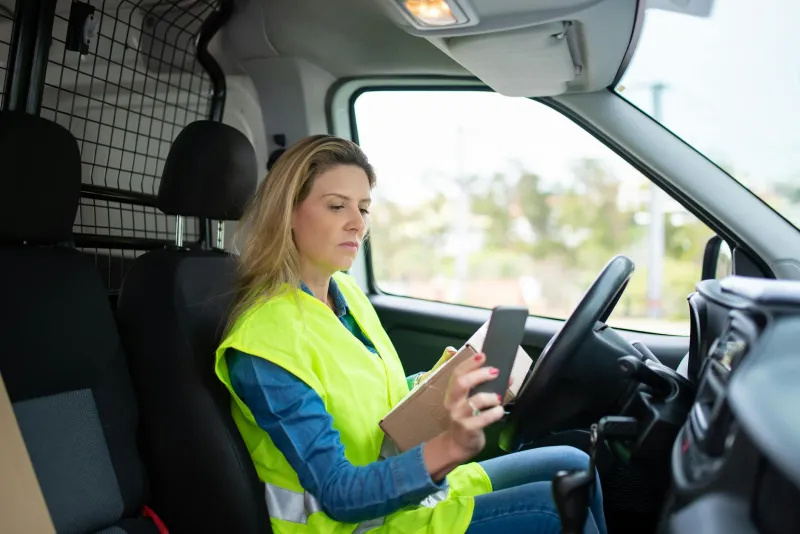
Every weekday morning, thousands of gig economy drivers across Britain fire up their apps, ready to navigate a delivery landscape that increasingly operates beyond the boundaries of traditional postal geography. What they encounter is a fundamental mismatch between how Britain officially addresses locations and how modern logistics actually works.
The Royal Mail postcode system, introduced nationally in the 1960s, was brilliantly engineered for its original purpose: sorting mail efficiently through a hierarchical network of postal facilities. Each postcode represents a geographic area that could be served by a single postal worker on foot, typically covering 15-20 properties in urban areas, or entire villages in rural regions.
 Photo: Royal Mail, via www.reussiralecole.fr
But precision isn't the postcode's forte. A single SW1A 1AA can encompass multiple buildings, while dense urban postcodes like E1 6AN might cover several city blocks. For a Deliveroo driver seeking flat 4B in a converted Victorian terrace, or an Uber driver hunting for the rear entrance of a business park, postcodes often create more confusion than clarity.
The Shadow Addressing Revolution
The gig economy hasn't waited for official solutions. Instead, it's quietly constructed its own location infrastructure, layered on top of Britain's postal geography like digital graffiti on Victorian brickwork.
Food delivery platforms now routinely ask customers to drop GPS pins on maps, bypassing postcodes entirely. Amazon Fresh drivers navigate using precise latitude and longitude coordinates. Uber has developed its own addressing system that identifies specific building entrances rather than general postal areas.
Most visibly, what3words has gained remarkable traction among delivery drivers. The system, which divides the globe into three-metre squares each identified by three random words, offers the precision that postcodes lack. "Pencils.shiny.laptop" might pinpoint the exact entrance to a tower block, while the postcode simply indicates somewhere within a several-acre development.
James Morrison, a Manchester-based food delivery driver with three years' experience, explains the practical impact: "I stopped using postcodes about two years ago. Half the time they take you to the wrong side of a building, or dump you in the middle of a housing estate with no clue which house is which. GPS coordinates or what3words actually get me to the door."
Commercial Consequences
This addressing fragmentation carries real commercial costs. Research by logistics consultancy Transport Intelligence suggests that failed first-time deliveries cost the UK economy approximately £1.6 billion annually, with addressing confusion cited as a primary factor.
The problem compounds in new developments, where postcodes might not yet exist or cover vast construction sites. Britain's housebuilding boom has created thousands of properties that exist in a geographic limbo, addressable by GPS but invisible to traditional postal systems.
For gig economy platforms, this creates a customer service nightmare. DoorDash reports that approximately 12% of UK delivery failures stem from addressing issues, while Uber estimates that imprecise location data adds an average of 3.2 minutes to each journey in dense urban areas.
Safety and Liability Gaps
Beyond commercial inefficiency, the addressing divide creates genuine safety concerns. Emergency services still rely primarily on postcodes, creating dangerous delays when gig workers need assistance at locations identified only by GPS coordinates or what3words references.
The London Ambulance Service has begun accepting what3words references for emergency calls, but most UK emergency services haven't adapted their systems. A delivery driver suffering a medical emergency at "rushed.colder.dines" might struggle to communicate their precise location to paramedics trained on postcode geography.
Insurance implications remain murky. If a delivery driver is injured at a location that exists on GPS but lacks a formal postal address, determining liability becomes legally complex. Traditional insurance policies assume addresses follow postal conventions, creating potential gaps in coverage for gig economy workers.
The Path Forward
Several potential solutions are emerging. The Geospatial Commission, established in 2018, has identified addressing standardisation as a national infrastructure priority. Their "National Address Gazetteer" project aims to create a unified database linking postcodes, GPS coordinates, and alternative addressing systems.
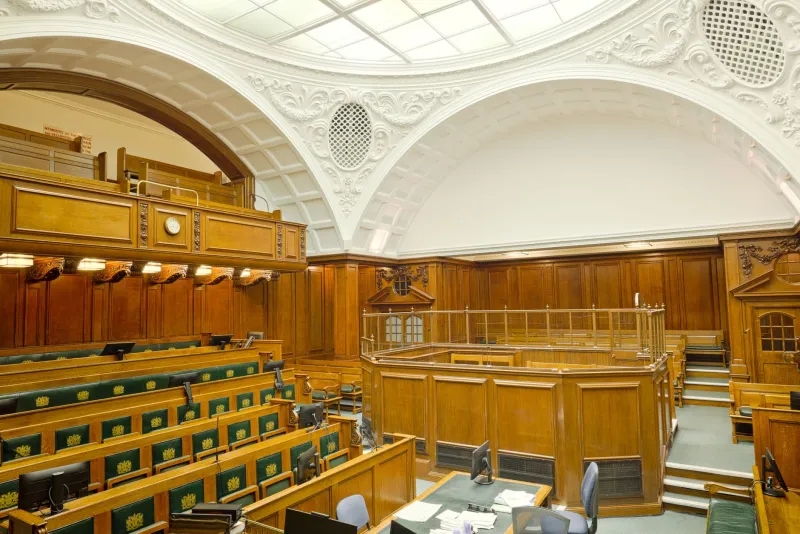
Some local authorities are pioneering integration. Bristol City Council now accepts what3words references for planning applications, while the Royal Borough of Greenwich has integrated GPS coordinates into its street naming and numbering processes for new developments.
 Photo: Bristol City Council, via assets.simpleviewinc.com
The private sector isn't waiting for government coordination. Ordnance Survey has launched "AddressBase Premium," which links traditional postal addresses to precise geographic coordinates. Meanwhile, startup Emu Analytics has developed "SmartAddress," an AI system that can translate between different addressing conventions in real-time.
Beyond Technical Fixes
Ultimately, Britain's addressing challenge reflects deeper questions about how we organise urban space in the digital age. The postcode system embodies a particular vision of geography: hierarchical, administratively defined, optimised for institutional rather than individual needs.
The gig economy's shadow addressing layer represents a different approach: precise, user-generated, optimised for navigation rather than administration. These competing visions of location create friction not just for delivery drivers, but for urban planners, emergency services, and anyone trying to coordinate activities across Britain's increasingly complex geographic landscape.
As Britain's cities densify and the gig economy expands, the pressure for addressing reform will only intensify. The question isn't whether change will come, but whether it will happen through deliberate policy coordination or continued organic evolution of parallel systems.
For now, Britain's delivery drivers remain cartographic pioneers, navigating between official geography and digital reality, one GPS coordinate at a time.