The Promise of Intelligent Infrastructure
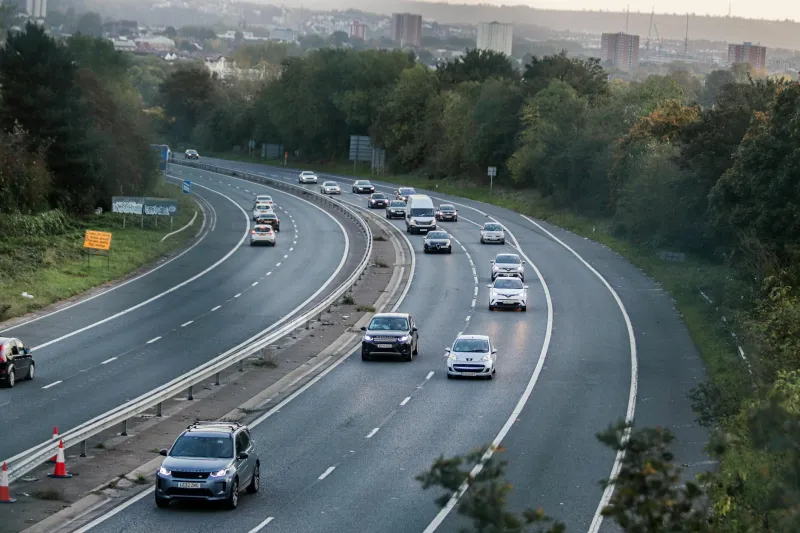
When Highways England first unveiled its smart motorway vision, the promise was compelling: sophisticated technology would transform Britain's busiest routes into responsive, data-driven corridors capable of managing traffic flows with unprecedented precision. Central to this ambition was the deployment of comprehensive sensor networks, variable message signs, and emergency refuge areas—all coordinated through advanced geographic information systems.
Yet beneath the surface of this technological marvel lies a troubling reality. The geospatial intelligence that should form the backbone of smart motorway operations is riddled with critical gaps, outdated references, and dangerous inaccuracies that are putting motorists at risk.
The Geographic Foundation of Smart Motorway Safety
Smart motorways operate on a deceptively simple principle: real-time data collection enables dynamic response to changing traffic conditions. Variable speed limits adjust automatically based on congestion patterns, overhead gantries display warnings about incidents ahead, and emergency refuge areas provide sanctuary for broken-down vehicles.
This entire ecosystem depends on precise geographic intelligence. Every sensor must be accurately positioned within the system's spatial database. Emergency refuge areas require exact coordinates to ensure drivers can locate them during crises. Incident detection algorithms need accurate distance calculations between sensors to triangulate problems effectively.
When this underlying geographic data contains errors—even seemingly minor discrepancies measured in metres rather than kilometres—the consequences can be catastrophic.
Mapping Failures in the Fast Lane
Recent analysis of smart motorway incidents reveals a disturbing pattern of geographic data failures. Emergency refuge areas marked as 'operational' in Highways England's mapping systems have been found to be physically inaccessible, blocked by construction work, or positioned incorrectly relative to their recorded coordinates.
On the M25's smart motorway sections, multiple instances have emerged where drivers following sat-nav systems to emergency refuges have found themselves directed to locations that exist only in digital databases. These 'phantom refuges' appear correctly positioned on mapping interfaces used by traffic control centres, yet correspond to empty stretches of hard shoulder or active carriageway.
The geographic intelligence crisis extends beyond refuge area positioning. Sensor coverage maps used by control room operators frequently display optimistic coverage patterns that don't reflect real-world conditions. Dead zones—areas where vehicle detection sensors fail to register stopped cars—persist despite mapping systems indicating comprehensive coverage.
The Human Cost of Data Decay
Behind these technical failures lie human stories of near-misses and tragedies. Sarah Mitchell, whose vehicle broke down on the M6 smart motorway near Birmingham, describes following overhead signs directing her to an emergency refuge area 800 metres ahead. "I limped along in the inside lane for what felt like miles," she recalls. "When I finally reached where the refuge should have been, there was nothing—just more carriageway and traffic thundering past."
Mitchell's experience highlights a fundamental flaw in how geographic data propagates through smart motorway systems. The refuge area existed in historical mapping databases but had been removed during construction work eighteen months earlier. Despite the physical change, multiple interconnected systems continued to reference the obsolete location data.
Similar incidents occur when emergency services receive automated alerts about stranded vehicles. Geographic coordinates transmitted by smart motorway sensors sometimes place incidents hundreds of metres from their actual locations—critical delays when response times can mean the difference between rescue and tragedy.
The Complexity of Dynamic Infrastructure Mapping
Smart motorways present unique challenges for geographic data management. Unlike traditional mapping subjects—buildings, boundaries, or natural features—motorway infrastructure exists in a state of constant flux. Lane configurations change based on traffic conditions. Temporary barriers alter available routes. Construction work reshapes physical layouts on weekly or daily timescales.
Maintaining accurate geospatial intelligence requires sophisticated data management protocols capable of handling this dynamic environment. Yet current systems often rely on manual updates that lag weeks or months behind physical changes. The result is a persistent disconnect between digital representations and on-ground reality.
This challenge is compounded by the distributed nature of smart motorway data systems. Geographic intelligence flows between traffic management centres, emergency services, sat-nav providers, and digital signage systems. Each transfer point introduces opportunities for data degradation or version control failures.
International Lessons in Geographic Precision
Other nations deploying intelligent highway systems offer instructive contrasts in geographic data management. Germany's autobahn smart infrastructure relies on centralised geospatial databases updated in real-time through automated sensor networks. When construction work closes an emergency bay, the change propagates immediately across all connected systems.
The Netherlands has implemented comprehensive geographic validation protocols for its smart motorway network. Before any infrastructure change becomes operational, automated systems verify that digital mapping data accurately reflects physical conditions through drone surveys and GPS verification.
These approaches demonstrate that the geographic intelligence challenges facing Britain's smart motorways are solvable—but require fundamental changes in data management philosophy and technical implementation.
A Blueprint for Geographic Reform
Transforming Britain's smart motorway geographic intelligence requires coordinated action across multiple dimensions. Real-time data validation systems must replace periodic manual updates. Automated verification protocols should confirm that digital representations match physical infrastructure before changes go live.
Integrated geospatial platforms need to replace the current patchwork of disconnected databases. When emergency refuge areas close for maintenance, every system—from traffic control centres to consumer sat-nav devices—should receive immediate updates.
Most critically, geographic accuracy must become a measurable safety metric within smart motorway operations. Current performance indicators focus on traffic flow improvements and journey time reductions. Future assessments must incorporate geospatial data quality as a fundamental component of infrastructure safety.
The Path Forward
Britain's smart motorway network represents billions of pounds of public investment in transportation infrastructure. Yet without addressing the geographic intelligence crisis at its foundation, this investment risks becoming a monument to technological ambition undermined by basic data management failures.
The solutions exist. International best practices provide proven frameworks for maintaining accurate geospatial intelligence in dynamic infrastructure environments. What's required is the recognition that geographic data quality isn't merely a technical consideration—it's a life-and-death imperative that demands immediate, comprehensive reform.
Until Britain's smart motorways can guarantee the geographic accuracy their safety systems depend upon, every journey on these supposedly intelligent highways remains a potentially lethal gamble with flawed data.