Care in the Dark: Why Britain's Social Care System Needs a National Geospatial Atlas
Photo: Пресс-служба губернатора Тульской области., CC BY 4.0, via Wikimedia Commons
Britain spends in excess of £22 billion annually on adult social care — a figure that understates the true scale of provision when informal, unpaid caring is included. Yet despite this enormous investment, the geographic distribution of that care has never been mapped with anything approaching the rigour we routinely apply to hospital catchments, GP surgery locations, or school admissions zones. The result is a system that commissioners are, in a very real sense, navigating in the dark.
This is not a peripheral concern. It is, this publication would argue, one of the most consequential geospatial failures in British public policy — and one that will grow more serious with every passing year as the demographic pressures of an ageing population intensify.
A Fragmented Landscape, Poorly Understood
Consider what a comprehensive geographic picture of Britain's social care provision would need to encompass. Registered care homes, nursing facilities, and extra-care housing developments represent the most visible layer — and even these are imperfectly mapped, with the Care Quality Commission's register providing a point-in-time snapshot rather than a dynamic spatial dataset. Domiciliary care services — the home visits that support hundreds of thousands of older and disabled people in their own homes — are far more diffuse and considerably harder to track geographically. Their coverage patterns shift constantly as providers enter and exit local markets, as contracts are retendered, and as individual care workers change their working areas.
Below this formal layer lies an even larger and almost entirely invisible geography: the informal care network of family members, neighbours, and community volunteers who provide the majority of care hours delivered in Britain. Their distribution is shaped by the same demographic and socioeconomic forces that determine where older and disabled people live — but it has never been systematically mapped, and local authorities have no reliable mechanism for understanding where informal caring capacity is concentrated or where it is dangerously thin.
The Commissioning Blindspot
The consequences of this geographic ignorance are felt most acutely at the commissioning stage. When a local authority or integrated care system seeks to allocate its social care budget, the absence of coherent spatial data means that decisions about where to invest, which providers to support, and where new provision is needed are frequently based on historical spending patterns, anecdotal intelligence, and political negotiation rather than systematic geographic analysis.
This matters because social care need is not uniformly distributed. It clusters geographically in ways that are predictable — older populations concentrated in coastal retirement communities, deprived urban wards with high rates of working-age disability, rural areas where informal caring networks are eroding as younger generations migrate to cities — but which are rarely made visible in the information systems that commissioners actually use.
The result is provision that is chronically misaligned with need. Areas of acute demand are underserved; areas with relatively lower need may attract disproportionate investment simply because they are better documented. This is not a failure of individual commissioners — it is a structural failure of the information architecture within which they work.
What Location Intelligence Could Offer
The application of geospatial technology to social care data is not a novel idea, but it remains at the margins of mainstream commissioning practice. A small number of local authorities have begun to experiment with location intelligence tools that overlay care provision data against demographic projections, deprivation indices, and transport accessibility metrics — and the results are illuminating.
In Norfolk, a county facing some of the most acute pressures associated with an older rural population, the county council's data team has been piloting a spatial analysis approach that maps registered care capacity against modelled demand, adjusted for travel time by car and public transport. The analysis has identified several market towns where the gap between projected demand over the next decade and current registered capacity is severe — and where the absence of accessible alternatives, given poor rural transport links, makes the situation particularly urgent. Without the geographic lens, these gaps would have remained invisible in aggregate commissioning data.
In Greater Manchester, work under the integrated care system architecture has explored the use of anonymised GP registration data and prescribing patterns as proxies for unmet social care need — georeferenced to lower super output area level to enable neighbourhood-scale analysis. The approach is methodologically imperfect, but it represents a meaningful step towards understanding where formal social care provision is failing to reach people who need it.
 Photo: Greater Manchester, via images.pexels.com
The Case for a National Atlas
Both pilots are valuable. Neither is sufficient. What Britain's social care system requires is not a collection of locally commissioned mapping exercises — admirable as individual initiatives — but a nationally coordinated geospatial social care atlas: a continuously maintained, openly accessible spatial dataset that integrates registered provision, workforce distribution, informal care estimates, and demographic demand projections into a single coherent picture.
Such an atlas would serve multiple purposes. It would give commissioners a shared evidential foundation for resource allocation decisions. It would enable national government to identify systemic provision deserts that transcend local authority boundaries — the coastal care crises and rural commissioning gaps that no single council has either the data or the incentive to document comprehensively. It would support workforce planning by revealing where care worker shortages are geographically concentrated. And it would, over time, create the baseline against which the impact of policy interventions could be rigorously assessed.
The technical barriers to creating such an atlas are not trivial, but they are not insurmountable. The Care Quality Commission already holds registration data for formal providers. The Office for National Statistics holds the demographic projections. Ordnance Survey and the Valuation Office Agency hold the address and property data needed to georeferenced individual care settings accurately. The Office for Health Inequalities and Disparities has developed deprivation and vulnerability indices that could serve as demand proxies. The data exists. What is missing is the political will and institutional architecture to integrate it.
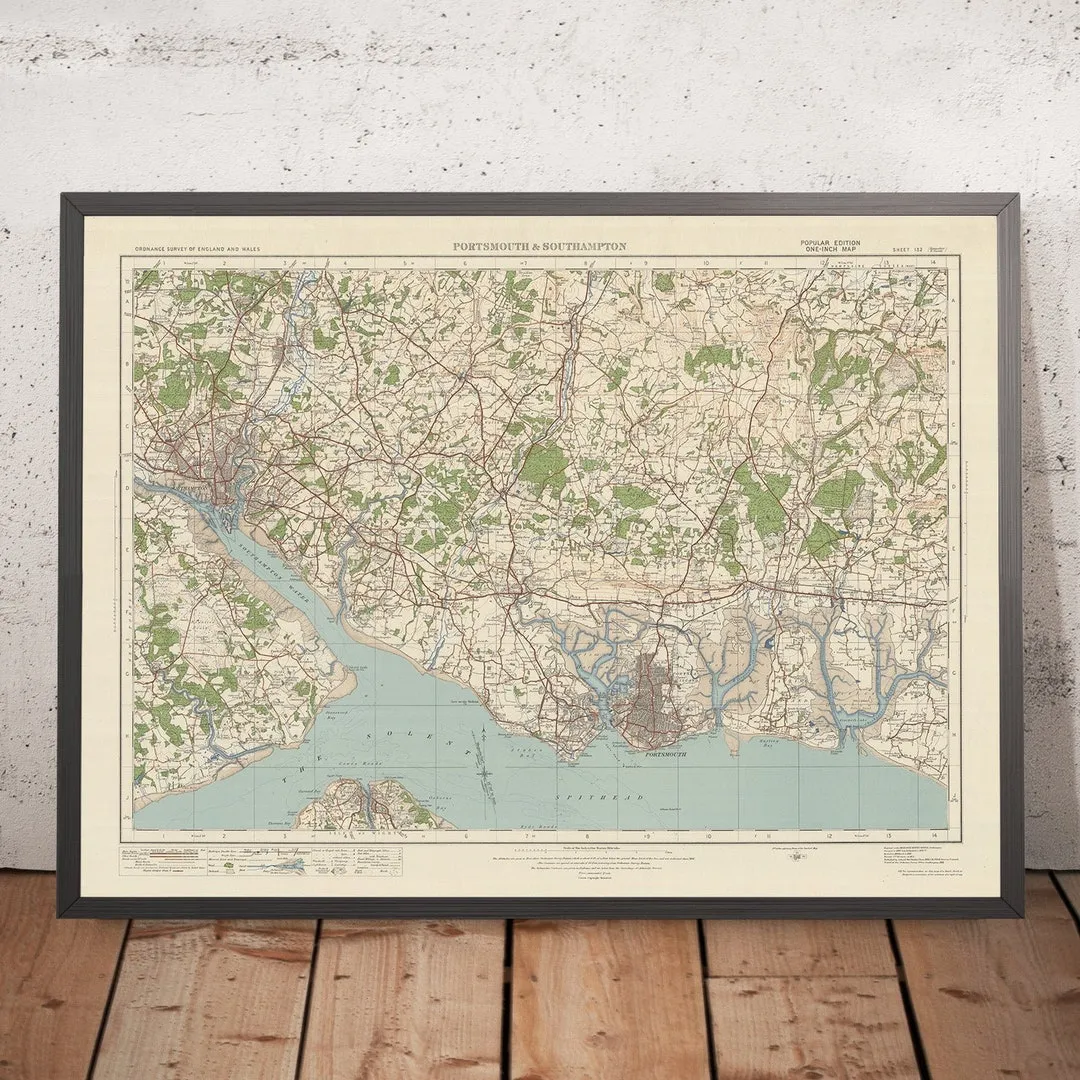 Photo: Ordnance Survey, via i.etsystatic.com
A Question of Urgency
Britain's population aged 75 and over is projected to grow by approximately 50 per cent over the next two decades. The care system that will be required to support that population does not yet exist — and building it will require decisions about where to invest, where to commission new provision, and where to concentrate workforce development efforts. Those decisions will be made with or without a coherent geographic evidence base.
Making them without one is not a neutral choice. It is a choice to allocate scarce public resources on the basis of incomplete and spatially distorted information — and the people who will bear the consequences of that choice are among the most vulnerable in British society.
A national geospatial social care atlas would not solve the funding crisis that afflicts adult social care. It would not resolve the workforce shortage or eliminate the structural tensions between health and social care commissioning. But it would ensure that the decisions made within those constraints are at least grounded in an honest geographic picture of where need exists, where provision falls short, and where investment is most urgently required.
That seems, at minimum, a reasonable standard to demand.